What to buy in the sales that actually fits this year’s trends starts with choosing versatile pieces you’ll wear repeatedly—not simply the items with the biggest markdown. For 2026, look for relaxed tailoring, useful layering, expressive but wearable color, and durable everyday basics, then check fit, fabric, and price against your own wardrobe. That advice matters when discounts can make an unnecessary purchase feel like a bargain: the U.S. Environmental Protection Agency estimates that 11.3 million tons of textiles were landfilled in the United States in 2018, a reminder that buying with a plan is better for both budgets and waste reduction.
How 2026 sales shopping fits this year’s fashion trends
A trend is a recurring direction in design, styling, or consumer taste—not a requirement to replace your wardrobe. For practical sale shopping, the strongest buys are trend-aware versions of items that already have a job in your life: a blazer you can wear to work, trousers that coordinate with several tops, or comfortable shoes suited to your daily routine.
Fashion coverage and runway collections can signal what designers are proposing, but they do not prove that a particular piece will suit every shopper or remain popular all year. Use trend reports as inspiration, then evaluate each sale item for cost per wear, care requirements, quality, and compatibility with clothes you own. The sections below group promising purchases by how easily they can earn a place in a real wardrobe.
A simple test for a worthwhile discount
A worthwhile sale purchase is one that meets a genuine need at a price you can afford and a quality level you are comfortable with. Before buying, check whether you can name at least three outfits using the item, whether it fits now, and whether its care label works with your routine. A discount percentage alone says nothing about how often you will wear it.
For a quick comparison, divide the price by the number of wears you realistically expect. A $90 jacket worn 30 times costs $3 per wear; a $45 top worn three times costs $15 per wear. These are planning examples, not a guarantee of future use, but the exercise can make a steep markdown less persuasive when the item has no clear role.
Buy relaxed tailoring and versatile layers
Relaxed tailoring means structured clothing—such as blazers, trousers, and vests—with a more comfortable or less rigid silhouette than traditional close-fitting suiting. It is a useful sale category because separate pieces can be styled together or worn with casual basics. Look for balanced proportions and fabric that holds its shape without feeling restrictive.
The key distinction is between relaxed and simply oversized. A garment should still sit correctly at the shoulders or waist, unless the cut is intentionally designed otherwise. Check the measurements, try it on with the shoes and layers you expect to wear, and inspect seams, lining, and buttons before deciding.
Blazers and waistcoats
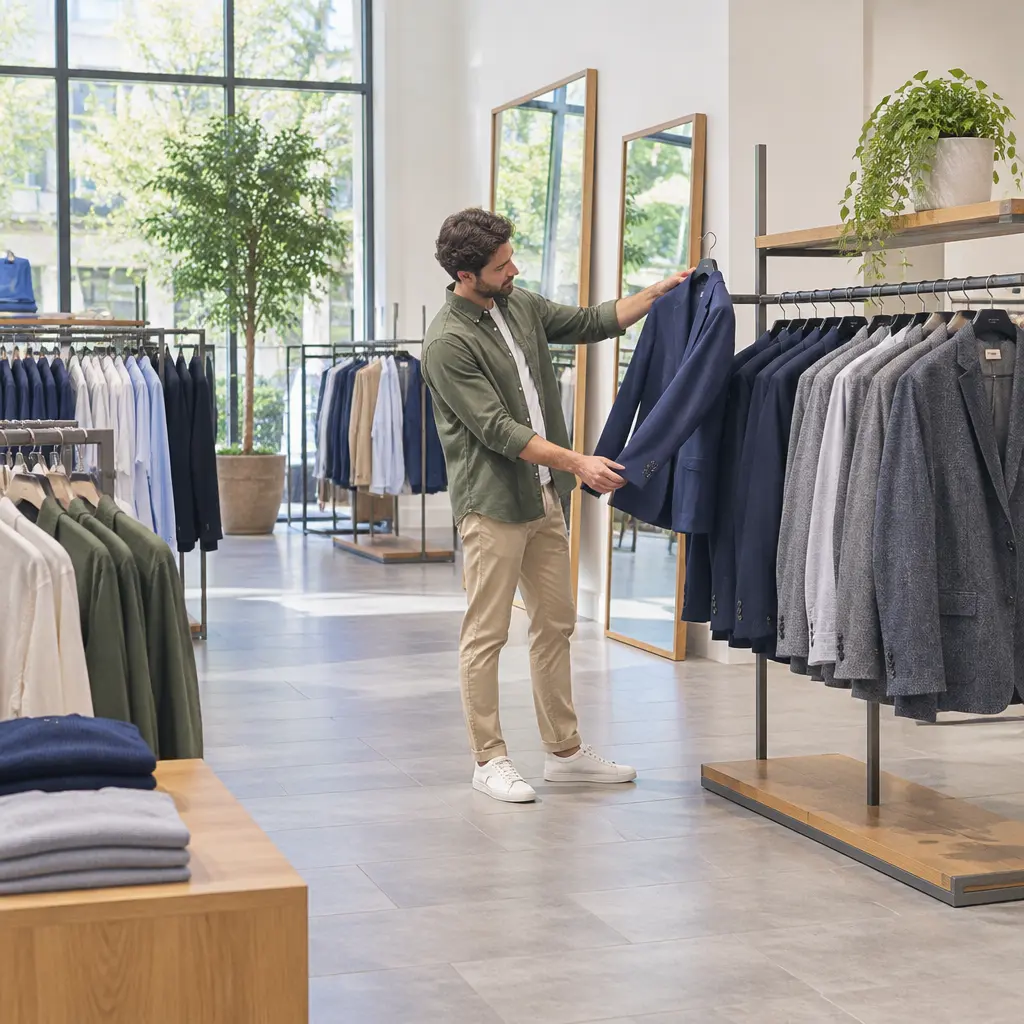
A blazer or waistcoat can bridge formal and casual outfits: wear one with matching trousers for a coordinated look, or pair it with jeans, a skirt, or a simple dress. A neutral shade such as navy, brown, charcoal, or cream may be easier to repeat, while a color or pattern makes sense if it connects to pieces already in your closet.
Prioritize fit at the shoulders, armholes, and chest. If tailoring is needed, include that cost in the sale price. A bargain that requires expensive alterations—or cannot be comfortably fastened—is not necessarily a bargain.
Trousers and useful layering pieces
Wide-leg, straight-leg, and softly tailored trousers can all work as trend-conscious options; the best choice depends on comfort, proportions, and existing shoes. Try sitting and walking in them, and check that the hem works with the footwear you own. For layers, consider a cardigan, lightweight knit, or overshirt that can be worn across different temperatures.
Look beyond appearance at fabric composition and care instructions. Wool blends may provide warmth and structure, while cotton and linen can suit milder weather but may wrinkle. These are general tendencies, not guarantees: construction, weave, lining, and garment care also affect how an item performs.
Choose color and accessories with intention
Color-led dressing and noticeable accessories offer a lower-commitment way to experiment with a trend than buying a full outfit. A scarf, belt, bag, or top in a fresh shade can update familiar basics, provided the item coordinates with clothes you will actually wear. Treat seasonal color forecasts as prompts rather than rules.
Colorful tops, knits, and scarves
A colored knit or top is a good candidate when it works with at least two bottoms and one outer layer you own. If you are unsure about a vivid shade, try it in a smaller accessory first. Check color and fabric in daylight when possible, since store lighting can make a shade look different.
For practical value, assess opacity, pilling risk, seams, and washing instructions. A low-priced knit that needs delicate cleaning may be less convenient than a slightly more expensive, washable option. Follow the care label rather than relying on fiber names alone.
Belts, bags, and jewelry
Accessories can add shape, texture, or a focal point without requiring a major wardrobe change. Before buying a belt, confirm its length and width work with the loops and garments you own. For bags, check weight, strap comfort, closures, and whether the interior fits your everyday essentials.
For jewelry, think about how often you will wear the piece and whether its finish suits your routine. An eye-catching accessory is only a useful purchase if it is comfortable, durable enough for its intended use, and compatible with your personal style.
Prioritize footwear and everyday basics
Footwear and basics are repeat-use purchases, so a sale can be valuable when it brings a suitable, well-made replacement within budget. The most relevant trend is often not a specific silhouette but a move toward comfort and versatility: shoes you can walk in and basics that layer easily.
Comfortable shoes you can test properly
Sneakers, flats, loafers, or boots may all be sensible buys, depending on climate and lifestyle. Try shoes on with the socks you intend to wear, walk around in them, and check for heel slippage, pressure points, and adequate toe room. A reduced price does not make an uncomfortable fit more wearable.
Inspect the sole, stitching, lining, and return policy. If shopping online, check the retailer’s sizing guidance and whether sale items are final sale. Consider the cost of resoling or repair only where the construction and materials make that a realistic option.
T-shirts, denim, and other wardrobe foundations
Basics such as T-shirts, denim, socks, and layering tanks are practical purchases when they replace worn-out items or fill a specific gap. Compare fabric feel, seams, stretch recovery, and transparency. For denim, sit, bend, and walk in the garment to see whether the waistband and leg shape remain comfortable.
The best basic is not automatically the cheapest or most neutral. Choose a cut and color that work with your actual wardrobe, and avoid stocking up on multiples until you know the fit and quality hold up after washing.
Use sustainability and price checks to avoid false bargains
A sustainable sale purchase is one that extends the useful life of clothing or meets a real need without creating avoidable waste. The U.S. Environmental Protection Agency’s 2018 estimate—11.3 million tons of textiles landfilled in the United States—provides a broad waste context, not a measurement of the impact of any single shopper. Choosing carefully, repairing items, and rewearing them can help reduce unnecessary replacement.
Check materials, construction, and care
Quality is a combination of material, construction, fit, and expected use. Look for secure seams, functioning closures, even stitching, and fabric suited to the garment’s purpose. Read the care label before buying: if an item requires time-consuming care you are unlikely to provide, it may not be a practical choice.
Labels and fiber percentages are useful but incomplete. They do not by themselves establish durability, working conditions, or environmental impact. When those factors matter to you, consult product-specific information from the brand and independent sources, and be cautious of broad sustainability claims without supporting details.
Compare the final price and return terms
Compare the sale price with the item’s current price elsewhere, not only with a listed original price. Include shipping, tailoring, cleaning, and return costs where relevant. Read final-sale terms before checkout, particularly for shoes, fitted clothing, and online orders.
Consumer advice from the Federal Trade Commission emphasizes checking seller information and understanding the terms of a transaction. For clothing sales, that means verifying the retailer, reviewing return deadlines and exclusions, and keeping receipts until you know the item works for you.
A practical sale-shopping checklist
Use this short checklist before you pay:
- Identify the wardrobe gap the item fills.
- Name three outfits you can make with clothes you already own.
- Check fit, fabric, construction, and care requirements.
- Calculate the realistic total cost, including alterations or delivery.
- Review the return policy and any final-sale restrictions.
- Estimate how often you will wear it, rather than focusing on the discount percentage.
For example, if you need a work layer, a well-fitting blazer that coordinates with existing trousers and jeans may be more useful than an unusually marked-down statement jacket that suits only one outfit. The same logic applies to shoes and accessories: buy for a real use case, then let trends guide the details.
Conclusion: Buy the trend you will actually wear
The strongest sale buys for 2026 are not a universal shopping list. They are trend-aware pieces—relaxed tailoring, versatile layers, thoughtful color, comfortable footwear, and dependable basics—that suit your lifestyle and work with what you already own. Fit, quality, care, total cost, and return terms matter more than the size of the markdown.
Before shopping, make a short list of genuine wardrobe gaps and set a budget. Compare pieces, try them carefully, and walk away when an item has no clear use. For further guidance, consult the EPA’s textile-waste information and the FTC’s consumer shopping advice, then choose the purchases you expect to wear and care for over time.
Sources: U.S. Environmental Protection Agency, “Textiles: Material-Specific Data,” https://www.epa.gov/facts-and-figures-about-materials-waste-and-recycling/textiles-material-specific-data; Federal Trade Commission, “Online Shopping,” https://consumer.ftc.gov/articles/online-shopping