A polished everyday outfit is a small, coordinated set of clothes that fits well, suits the occasion, and feels comfortable. Looking put-together without trying hard can start with four versatile pieces: a well-fitting top, tailored trousers, a structured outer layer, and clean, simple shoes. The formula works because each item has a clear role, while neutral colors and good fit make them easy to combine. It also favors repeating useful basics over chasing every trend—a practical approach when clothing is a significant household expense. The U.S. Bureau of Labor Statistics reported that American households spent an average of $2,041 on apparel and related services in 2023.
A four-piece outfit formula makes everyday dressing easier
There is no single official definition of a “put-together” outfit. In this article, the term means a look that appears intentional because its fit, condition, color, and formality work together. The four-piece formula is a styling framework, not a rule: choose one top, one pair of tailored trousers, one structured layer, and one pair of clean shoes. A belt or other small accessory can be added when useful, but the outfit does not depend on it.
The idea is related to a capsule wardrobe, a small collection of clothing designed to mix and match. Its key characteristics are versatility, appropriate fit, and compatibility across pieces. A neutral palette—such as navy, black, gray, cream, or olive—can make coordination simpler, while one subtle texture or accent color keeps the result from feeling uniform. Because no reliable study establishes that precisely four garments are ideal for everyone, treat the number as a memorable starting point rather than a scientifically proven threshold.
The well-fitting top: the outfit’s foundation
A well-fitting top is a shirt, knit, blouse, or similarly simple piece that sits comfortably at the shoulders and allows easy movement. It should not pull across the chest, bunch excessively, or require constant adjustment. A crisp button-down, fine-gauge sweater, plain T-shirt in good condition, or relaxed blouse can all work; the best choice depends on climate, personal style, and the setting.
Fit often matters more than brand or price. Check that sleeves end where intended, the neckline feels comfortable, and the hem works tucked or untucked. A top in a solid, repeatable color makes it easier to pair with trousers and outerwear without adding visual clutter.
Tailored trousers: a clean, adaptable silhouette
Tailored trousers are pants with a deliberate shape and an appropriate length, whether they are formal slacks, straight-leg chinos, or polished wide-leg pants. “Tailored” does not mean tight: the waistband should sit securely, and the cut should allow comfortable sitting and walking. A simple hem and minimal distressing help them move between casual and smart-casual settings.
Choose a color that works with more than one top. Black, navy, charcoal, and tan are common options, but the most useful shade is the one that fits the rest of your wardrobe. When buying, consider the care label and fabric weight as well as appearance; a pair that needs impractical upkeep may be worn less often.
A structured layer: the finishing piece
A structured layer is an outer garment that gives an outfit definition, such as an unlined blazer, chore jacket, cardigan with shape, or neat overshirt. It adds a visible outline and can make a basic top-and-trouser combination look more intentional. The layer should fit comfortably over the top without restricting the shoulders or arms.
Pick the degree of structure for the occasion: a blazer reads more formal, while a chore jacket or overshirt is typically more relaxed. The U.S. Environmental Protection Agency notes that textiles are part of the materials in municipal solid waste, making longevity and repeated use relevant considerations when building a wardrobe. A durable layer that suits several outfits may be more useful than a highly specific trend piece.
Clean, simple shoes: the practical anchor
Clean, simple shoes are comfortable footwear with a shape and condition that suit the outfit. Depending on the setting, they might be loafers, understated sneakers, flats, ankle boots, or low heels. Keeping them in good repair matters: wipe away dirt, check soles and laces, and follow the material’s care instructions.
Shoes also affect how formal the combination feels. Minimal sneakers can make trousers and a jacket more relaxed; loafers or boots can make the same pieces look more polished. Prioritize comfort and the demands of the day rather than treating one shoe style as universally appropriate.
Fit, color, and occasion turn four pieces into a complete look
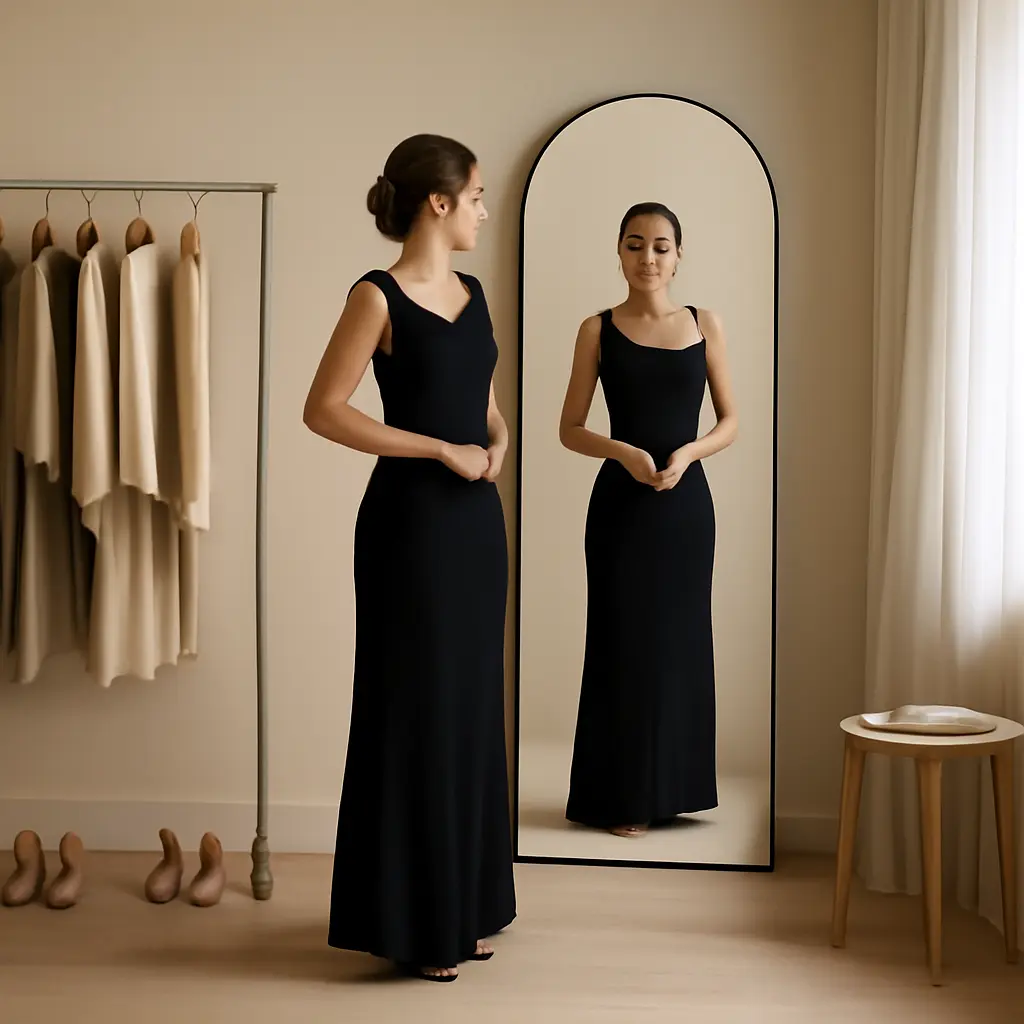
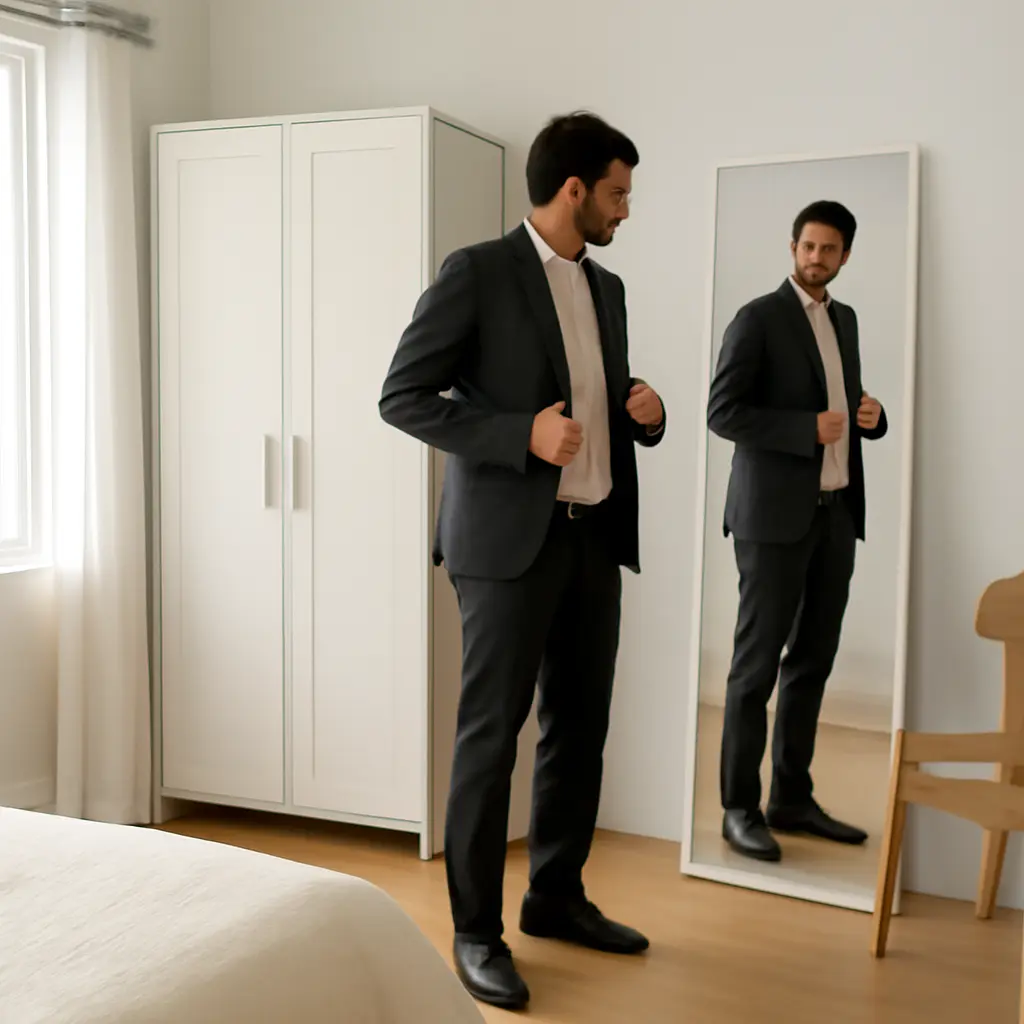
Once the four categories are chosen, the outfit’s success depends on how they relate. Fit should allow movement, colors should coordinate, and the overall formality should match the destination. A useful check is to look at the outfit in a mirror and ask whether any piece seems uncomfortable, unusually worn, or out of place for the occasion.
Use a repeatable color palette
A repeatable palette is a small group of colors that appear across multiple wardrobe pieces. Pairing two or three compatible tones can make dressing faster and reduce the chance of an accidental mismatch. For example, a cream top, navy trousers, and a gray layer can be finished with clean dark shoes; alternatively, a black-and-white base can be softened with a tan jacket.
These are practical examples, not fixed color rules. Contrast, pattern, skin-tone preferences, cultural context, and personal taste all matter. If an outfit feels too plain, introduce one small variation—such as a textured knit or a muted accent—rather than adding several competing elements.
Match the formality to the setting
A smart-casual outfit combines neat, everyday clothing with some features of formal dress. The four-piece formula can be adjusted for an office, a casual dinner, or travel by changing the fabric, layer, and shoes. A blazer and loafers may suit a more formal workplace, while a chore jacket and clean sneakers can work for a relaxed day.
Dress codes vary between employers, communities, and occasions, so the venue’s expectations take priority over a generic formula. For travel or long days, comfort and weather protection should also guide the choices. The goal is not to look dressed up everywhere; it is to look appropriate without needing a complicated outfit.
A simple routine keeps the four-piece wardrobe wearable
A reliable outfit becomes low-effort when its pieces are clean, maintained, and ready to wear. Before buying anything, try combinations with clothes already owned. If one category is missing, fill that gap rather than purchasing a complete new look. This makes the formula more personal and helps avoid redundant pieces.
- Choose a comfortable top and trousers that work together.
- Add a layer suited to the weather and the occasion.
- Select shoes that are clean, comfortable, and appropriately formal.
- Check fit, condition, and ease of movement before heading out.
For example, a person heading to a casual office might wear a plain knit top, straight-leg trousers, an overshirt, and leather sneakers. For a dinner, the same trousers and top could be paired with a blazer and loafers. These examples show how a small set of useful pieces can create different impressions without requiring a new outfit for each event.
Conclusion: four dependable pieces are a starting point, not a dress code
A well-fitting top, tailored trousers, a structured layer, and clean shoes provide a practical foundation for looking put-together with little effort. Their value comes from fit, condition, comfort, and coordination—not from a particular brand or a strict number of garments. Build around the clothes you already wear, adapt the formality to your plans, and choose pieces you can maintain and reuse. For further guidance, consult clothing-care labels and reputable consumer resources before making wardrobe purchases.
Sources: U.S. Bureau of Labor Statistics, Consumer Expenditures—2023, https://www.bls.gov/news.release/archives/cesan_09122024.htm; U.S. Environmental Protection Agency, Textiles: Material-Specific Data, https://www.epa.gov/facts-and-figures-about-materials-waste-and-recycling/textiles-material-specific-data.