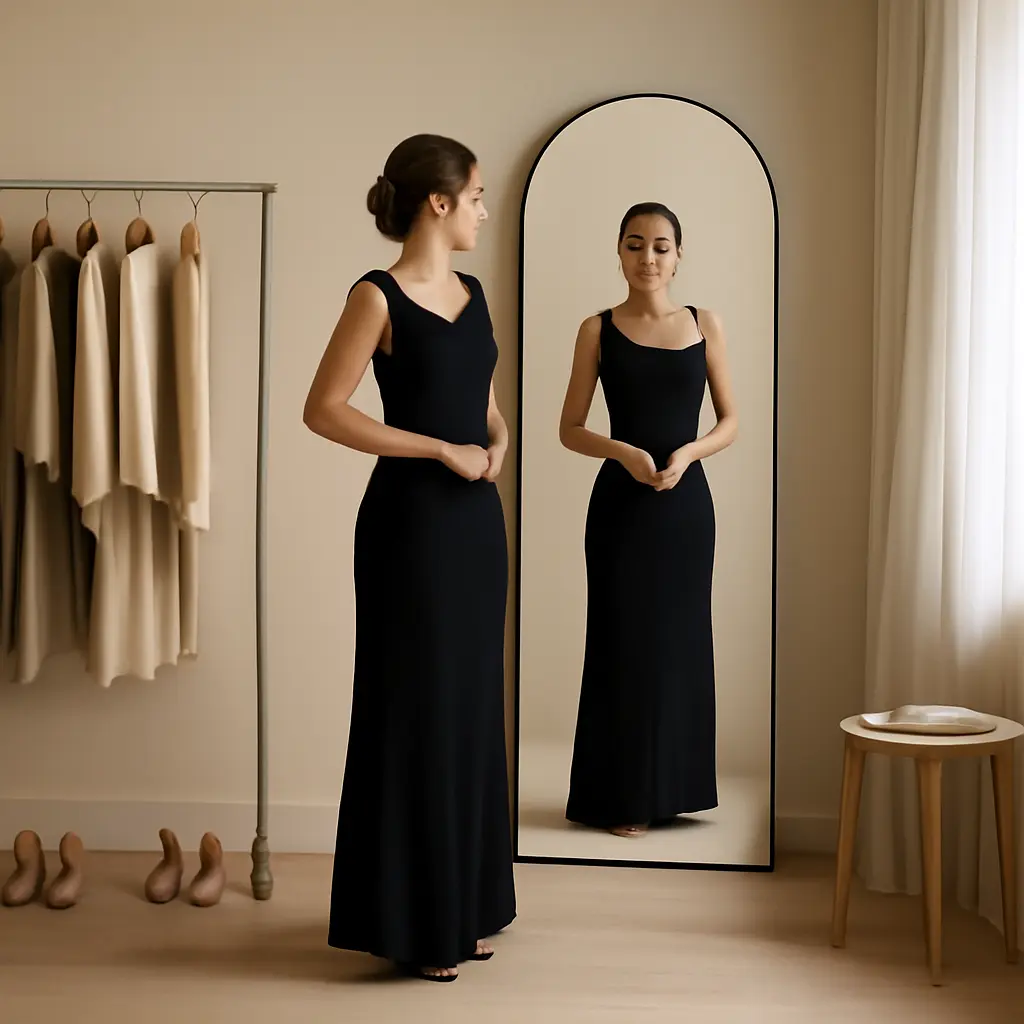
Quiet luxury evening wear is formal dressing built around exceptional fit, fabric, and restraint rather than obvious logos or conspicuous decoration. Its appeal is practical as well as aesthetic: a small, versatile wardrobe can serve more occasions when garments are well made and thoughtfully styled. The approach favors enduring silhouettes, tactile materials, careful tailoring, and subtle finishing—while still allowing color, jewelry, and personal expression. It is less a fixed dress code than a way to make evening clothes feel polished without looking overworked.
What quiet luxury means for evening wear
“Quiet luxury” is a popular fashion phrase, not a universally standardized industry term. In evening wear, it describes a visual language of refinement: quality is communicated through how a garment hangs, feels, and is finished, rather than through prominent branding. The related ideas include understated glamour, discreet craftsmanship, timeless dressing, and refined minimalism.
The distinction is not simply “plain versus embellished.” A clean-cut dress can feel luxurious because its fabric moves beautifully and its proportions are exact; a richly colored or embellished piece can also fit the approach when the details feel intentional. The central test is whether each element contributes to the whole.
Restraint is editing, not austerity
Restraint means choosing a focal point instead of adding every possible flourish. A sculptural neckline, a luminous fabric, or a strong earring may be enough. This creates visual clarity while leaving room for individual taste. It does not require dressing in beige, avoiding prints, or buying expensive labels.
Luxury is a set of observable qualities
In a garment, perceived quality can come from fabric hand, opacity, drape, seam alignment, lining, closures, and fit. These are tangible features a shopper can inspect, unlike a vague promise that something is “timeless.” A well-finished mid-priced garment may embody the quiet-luxury approach better than a costly piece with poor fit or uncomfortable construction.
That focus on quality naturally leads to the most important decision in an evening outfit: choosing materials that look composed under real lighting and feel comfortable over several hours.
Fabric and fit make quiet luxury evening wear work
Fabric and fit are the foundations of understated evening dressing. There is no single textile that defines quiet luxury; suitability depends on the event, season, care requirements, and how the fabric behaves when worn. Silk, velvet, crepe, satin, fine wool, and responsibly sourced alternatives can all work when their weight and finish suit the garment.
Choose fabric for movement and setting
A fabric should be assessed in motion and in the lighting where it will be worn. Crepe often offers a relatively fluid, matte surface; velvet adds depth and is especially associated with colder-weather occasions; satin reflects light and can make a simple shape feel more formal. Lightweight fabrics may need lining to prevent transparency and improve how they fall. Before buying, check whether the garment creases easily, catches on jewelry, or requires specialist cleaning.
Fiber content alone does not guarantee quality. Weave, finishing, construction, and care all affect performance. The Federal Trade Commission’s textile labeling rules require most covered textile products to disclose fiber content, country of origin, and the identity of the responsible business, giving shoppers useful information to consider alongside the garment’s feel and construction.
Prioritize fit over a trend-led silhouette
Fit is the relationship between a garment and the body in movement—not merely its size label. Shoulder seams, waist placement, hem length, sleeve mobility, and how a closure sits can change the entire impression of an outfit. A simple dress that fits comfortably and cleanly will usually look more considered than a dramatic piece that pulls, twists, or requires constant adjustment.
Alterations can be especially useful for evening garments, where small proportion changes are highly visible. A tailor can adjust a hem, refine a strap, or improve the fit through the waist, though not every fabric or design can be altered easily. Try the garment with the shoes and undergarments intended for the event, then sit, walk, and raise your arms before deciding.
Use a controlled palette without limiting color
Black, navy, ivory, chocolate, and charcoal are common foundations because they pair readily with other pieces. But quiet luxury is not a color rule. Jewel tones, metallics, and muted prints can feel equally considered when the palette is coherent and the garment’s shape remains the focus. For a low-effort combination, pair one strong color with restrained accessories rather than matching every detail exactly.
Once the garment is selected, accessories determine whether the outfit feels personal, formal, or overly decorated. The quiet-luxury principle continues to apply: choose details for their contribution, not simply for their visibility.
Accessories and styling complete the look
Accessories are the supporting elements of an evening outfit: shoes, bags, jewelry, outerwear, and grooming. In understated styling, they should complement the garment’s line and texture while remaining practical for the occasion. “Minimal” does not mean accessory-free; it means each choice has a reason.
Let one detail lead
A single focal detail keeps the outfit legible. For example, a fluid black dress might be paired with gold earrings and a compact clutch, while a velvet suit could take a simple shirt and polished shoes. If the garment already has a dramatic neckline or texture, accessories can be quieter. If the clothing is very simple, a distinctive bracelet or shoe can provide contrast.
Balance polish with comfort
Evening dressing should work for the full event, not just for a photograph. Shoes need to be walkable, a bag should hold essentials, and layers should suit the venue and weather. A well-maintained pair of shoes or a bag with clean lines can look refined without being new or branded. Comfort supports confidence because it reduces the urge to adjust or abandon the outfit midway through the evening.
Treat grooming as part of the finish
Grooming includes hair, makeup, nails, and garment care. It need not mean a highly formal beauty routine. Clean shoes, pressed or properly steamed clothing, and a deliberate hairstyle often do more for a polished impression than adding another accessory. For delicate materials, follow the care label and test any home-care method in an inconspicuous area.
This attention to wearability has a broader benefit: when evening pieces are chosen to work with existing clothes and cared for well, they can be worn repeatedly rather than treated as one-event purchases.
Build a versatile evening wardrobe thoughtfully
A versatile evening wardrobe is a small collection of garments and accessories that can be recombined across occasions. It is not necessarily a capsule wardrobe with a fixed item count. The useful principle is cost per wear: consider how often a piece is likely to be worn, how many existing items it can work with, and whether it can be maintained.
Start with the occasions you actually attend
A wedding guest outfit, a work dinner, a theater evening, and a formal gala may have different expectations. Begin with the invitations and venues that appear in your real calendar rather than buying for an imagined lifestyle. Check dress codes, season, travel needs, and whether the event involves standing or dancing. This makes it easier to identify a useful foundation, such as a versatile dress, a tailored suit, or separates that can be dressed up.
Repeat and restyle without looking repetitive
Rewearing is a practical feature of a considered wardrobe, not a failure of creativity. The same dress can look different with a jacket, a change of shoes, or a different jewelry choice. The Ellen MacArthur Foundation has described the scale of the fashion system as resource-intensive and has highlighted the value of keeping clothing in use for longer. Its work supports a wider case for buying less impulsively and using garments more fully, although it does not establish that any one aesthetic is inherently sustainable.
Shop by inspection, not by label
Before purchasing, inspect seams, hems, lining, closures, and fabric recovery after gentle handling. Check the care label and consider whether repairs or alterations would be accessible. Secondhand and rental options may help extend the use of clothing or reduce the need to own a piece worn rarely, but availability, fit, condition, and cleaning practices vary. The best option is the one that suits the wearer’s needs and will realistically be used.
A simple way to illustrate the approach is a three-column wardrobe chart: “foundation” garments such as a dress or suit; “finish” pieces such as shoes and a bag; and “variation” pieces such as jewelry, a jacket, or a scarf. Mapping combinations across the columns can show how a few well-chosen items serve several events.
Conclusion: quiet luxury is thoughtful evening dressing
Quiet luxury evening wear is best understood as a method, not a shopping list: choose garments for fit and material, edit accessories with intention, and build around occasions you genuinely attend. Its defining qualities—restraint, craftsmanship, comfort, and repeat wear—can be achieved at many budgets and do not depend on a recognizable label.
For a practical next step, review your existing evening clothes, identify what fits well and gets worn, and note one gap before shopping. Then check construction and care requirements as carefully as appearance. The result is a wardrobe that feels polished in the moment and remains useful long after one event.
Sources: Federal Trade Commission, “Threading Your Way Through the Labeling Requirements Under the Textile and Wool Acts,” https://www.ftc.gov/business-guidance/resources/threading-your-way-through-labeling-requirements-under-textile-wool-acts; Ellen MacArthur Foundation, “Fashion and the circular economy,” https://www.ellenmacarthurfoundation.org/topics/fashion/overview.